http://www.hardknock.tv Exclusive in-depth interview with Tito Lopez. In part 2 Tito tells Nick Huff Barili the story of how he first meet Dr Dre at Encore Studios and how he ended up free-styling on the spot for him. He goes on to talk about ghostwriting for Dre, elaborates on what the creative process is like working with him and even goes us insight as to why he thinks Detox hasn’t come out yet. Tito also recalls being in the studio when Kendrick Lamar and Dre were recording The Recipe and how he tried to get on the track to no avail. Tito says there aren’t too many new artists that he wants to work with but Kendrick Lamar and Odd Future are a few he would. As the interview continues Tito addresses beef he had a while ago with Saigon which he says started because he felt Saigon was disrespecting the Southern Rappers.
Check out Tito’s Freestyle and part 1 of this interview at www.hardknock.tv
Bad Meaning Good is a BBC documentary originally aired on TV in 1987 and put together by Tim Westwood.
The documentary provides an insight into how the culture emerged in London and who the key figures in the scene were
The video features Pride, Daddy Speedo, Fly Boy Dee, MC Crazy Noddy, London Posse, Trevor Nelson, Sipho, Run DMC, DJ Fingers, Cookie Crew, Wee Papa Girl Rappers and more.
Westwood & Action Bronson….Talking women & sex on tour, favourite food, weightlifting, beard comparisons with Rick Ross, BBQ pit tips, smoking wax, new music & more on Tim Westwood TV
Watch a SashTV interview with slightly high and/or surprised looking A.C, as he talks about his recent award for his video “True Story, what he’s been up to, and what he’ll be getting up in the near future.
I recently interviewed Birmingham and London locals (I’m sure there are trains involved) duo H.L.I. As always we over here at HHLAT are always excited to talk to, or promote artists that take hip-hop down interesting paths, and mix up the genre with more than just what you’d might expect, without being cheesy or done extremely badly (Don’t pretend as if at least 3 people haven’t come to mind). H.L.I are one of those groups and aren’t happy just to keep to one formula or one idea. Don’t think however that you’re any less of a fan just because you’re only a fan of one particular part of the genre, not all of us can be open minded eh?…Well that’s what we’re here for, to be sent a whole ton of bad music, and an even bigger ton of brilliant, and just a litte bit of in between, all to filter it out and present it to YOU (CAPITALS). The dudes in H.L.I manage to mix up all the old skool elements, throw in a heavy flavouring of the recent, and then top it off with their own little take. I’m sorry if that was a pretty messy description but I’m a fan of weird seg-ways. The best way I can describe these guys is to say, whether you like road-man rap, you’re a bboy/girl elitist that hates everything past ’97, a huge packbacker, or like us, and you like pretty much everything done in the name of hip-hop as long as it’s good, then hooray you might just like H.L.I.
Thank-you to the boys in H.L.I for an extremely interesting and good natured interview!
For fans of Scroobious Pip, Aesop Rock, Roots Manuva, The Ruby Kid, Wu-Tang (RZA to be specific).
Words: Aimee
Generic questions 1 and 2: Who are you, and how did HLI come about?
SENSEI C: My name is Sensei C. I’m a MC, composer, musician, producer, actor and writer. I’ve been making and performing hip hop music for about 10 years. I’m a pizza snob and I love movies.
ELAI IMMORTAL: I am Elai Immortal. Child Educator, head amputator.
SENSEI C: HLI is an experimental hip hop group from Birmingham. We met through our mentor Joel the Custodian and found that in spite of our different backgrounds we had a similar appreciation for words, ideas, knowledge and art and music which pushed the parameters of normality. I guess we both saw ourselves as renegades.
ELAI IMMORTAL: I find the ‘experimental’ tag somewhat a misnomer because what good music isn’t? But it serves a purpose as far as necessary pushes go.
What originally got you into hip-hop?
SENSEI C: I had always enjoyed hip hop from a very early age but it was never something I thought I could be a part of as such. By my late teens I had already been on a long and winding musical journey playing with different types of bands and making all sorts of songs by myself. Eventually I bought a sampler and started making loop based instrumental music. I got into hip hop in big way when I started seeking out and researching non white music. I’d looked at my record collection one day and noticed the distinct lack of melanin. I was seeking out things like King Tubby, Charlie Parker and Jungle Brothers. At this point it was mainly the beats that I was interested in, but soon as I came to realise the diversity of styles within rap I was absolutely fascinated by it. I had always written song lyrics from as far as I can remember around 6 years old but this was something new and I still didn’t see how could be a part of it. It was different then and seeing a white British guy rapping wasn’t a well known thing. Then I discovered some of the more left field north American stuff like Buck 65, Sage Francis and Aesop Rock and I figured that if they were allowed to do it then there was nothing to stop me, so I never stopped from that point on.
ELAI IMMORTAL: I had cousins and friends who would blast Ice Cube, Tupac in their cars. Then I discovered Wu-Tang which changed my life. Not on some ‘J-Dilla changed my life.’ An introduction to ‘Knowledge of Self’ seeking and subsequent historical, political, spiritual, anthropological learnings. I heard these rappers call each other God and the only other place I’d heard that was Sufi poetry. Musically Hip-Hop was so rich and diverse as well, as well as dramatic. I’d grown up listening to Qu’walli, Bollywood and Michael Jackson so sonically that really resonated with me, as well as thematically. Hip-Hop allowed you to party too. Even as a kid, I appreciated its duality and badassery. I didn’t get into Hip-Hop because it was peace and flowers; I got into Hip-Hop because it was hard and menacing.
How would you describe yourselves to someone who’ve never listened to you?
ELAI IMMORTAL: It’s interesting. Sharp electronic synths with organic melodic sensibilities. Wordy but the funk is there. Best to head over and listen to the music really!
SENSEI C: I would tell them that our music pulls sound from multiple directions and is constantly finding new ways to be sonically fascinating but that it retains an essence characterised by time honoured values. We make music that’ll excite your imagination whilst still being banging enough to get your stomp on. The lyrics are in places heavy but are delivered musically, as though they were any other instrument.
Your style mixes a lot of different influences and genres, and still manages to actually work without sounding like a big old massive mess. A pretty hard feat for any artist to manage! Was it was always your active intention to pair hip-hop with less ‘traditional’ musical genres, or did it come naturally?
SENSEI C: Both Elai and I have a strong musical background that goes well beyond hip hop. Either one of us are fascinated by sound and all the different ways it can be rearranged. Both of us intrigued by the role that music plays culture throughout the world and the power it has over people. Hip Hop manages to synthesise all of that. It is constantly being reconfigured as it grows and more ideas come into the mix and things move forward whilst retaining a sense of their history. I think that combining “less traditional genres” with hip hop is wholly in the spirit of the art form.
ELAI IMMORTAL: Afrika Bambaata would play any record that would move a crowd. Any good producer and musician will listen to a plethora of music outside their so-called ‘genre’ so that will be reflected in their music. My culture has a lot to do with things I like or don’t like so it just naturally manifests. I don’t really over-think it. Or maybe I do. Or maybe I don’t. Or maybe I do. Actually, just listening to some 90s Bjork and Radiohead shows how beyond they already were, and look how much Hip-Hop influenced them. Prince had his Hip-Hop modes and he’s an innovator who influenced so many Hip-Hop pioneers in the first place. You can select 5 of his albums and they will sound completely different to each other but it’s always HIM. It’d be boring otherwise. Evolve or die like Alan Moore said.
I hate having to use the word ‘traditional’ because it’s hip-hop; everything is meant to be progression. I feel like anyone could enjoy HLI, backpackers or road-rap lovers alike; but do you ever find there are a certain crowd or group of kids that you appeal to?
SENSEI C: Interesting question. Not really, that’s something we’ve consciously tried to avoid. As I’ve said we love such a range of hip hop and music in general and, without wanting to spread ourselves to thin, have strived to make tunes which can be bumped in a variety of circumstances
ELAI IMMORTAL: I’m glad you say that. Some people listen to ‘Opus Day’ and it’s grime to them which is great because grime has such an intense energy and identity that a lot of newer Hip-Hop lacks. ‘Don’t Panic!’ is grungy. We’ve been blessed by the older gods and had props from the youngest Hip-Hop kids so just want to make the numbers bigger really. This ain’t for everyone but every type of person can get into it.
I know Omniglyph is technically an EP and has remixes, but was there a certain theme or narrative you wanted to expose the listener to, or was it simply how each track came out?
ELAI IMMORTAL: Omniglyph is the launch, the lift-off, the arrival and the ‘we were already here’ at the same time. There’s an arc within the project and an extended arc that carries on for the next few HLI projects. I wanted the remixes to carry on the ‘story’ – each remix is like viewing a landscape at a different time or under a different spectrum of the light so they are not throw-ways or padding but additional songs with each remixer playing an important role. In terms of the words, we wanted to introduce some themes plus show off as well so there’s a mix of playfulness, lyrical gymnastics but an always present meaningfulness. On ‘Vectors’ we’re blowing darts for example, Omniglyph (the title track) is closer to the heart.
SENSEI C: There is a narrative to the record relating to transcending temporal reality and the way that that plays into everyday situations, however, that is to some degree simply symptomatic of mine and Elai’s approach in general. Certain tracks like Unseen Universe and Omniglyph were made with a sense of them being book ending pieces and there were some key concepts we wanted to include but we never wanted anything to be too forced or laboured.
What was the response like for the EP?
ELAI IMMORTAL: We’ve had people champion it. People who have bought it and given us feedback, to reviewers who have ‘got’ what its about, all of which is gratifying and rewarding. We want to push a culture-shift in how people listen to music. To build enough following that could eventually make the mainstream interesting again. An album is like a good book and people really ain’t reading like that these days. The ease at which music can be downloaded and then instantaneously disposed into a recycle bin undermines the process and craft of creating music, which does artistically worry me. There’s an over saturation of creators and media so Tom Waits said it well: “They have removed the struggle to find anything. And therefore there is no genuine sense of discovery. Struggle is the first thing we know getting along the birth canal, out in the world. It’s pretty basic. Book store owners and record store owners used to be oracles, in that way; you’d go in this dusty old place and they might point you toward something that would change your life. All that’s gone.” I’m no Luddite but want to do something about these things. We want people to have a relationship with an album and to discover new things on each listen. Can HLI bring a wonder to listeners? I hope so. Will we carry on making music regardless? Of course! We’re having a lot of fun doing this.
When writing, what influences the content?
SENSEI C: Good question. The vast spectrum of experience. Personally I nearly always equate art to a conversation or interaction with someone, like if you met them at a party. There should be something distinctive about their personality, you should find them engaging. The best art for me is often that which manages to show breadth. At times it can profess values which appear to contradict one another or aren’t compatible. This is the nature of people, few people are entirely predictable and one dimensional when you begin to look deeper into it. As time has gone one I’ve tried to ensure that when I’m writing I’m trying to express as much of my personality as can work.
ELAI IMMORTAL: It’s true cuz sometimes I don’t know what the heck Sensei C is going on about in his verses. He’s like that at parties too. But colloquialisms can get tiresome and like we said before, we like our art to be latticed. I’m not a fan of didactic art generally. As far as influences go… books I happen to be reading, comic books, relationships, films, conversations, cartoons, mythology, religious imagery. Everything is everything.
Talking in more wider sense, UKHH and hip-hop in general has definitely expanded recently in what it incorporates, and is ‘getting back to the basics’ of real lyrical content. What would your thoughts on this be, and where do you hope to see it going, both in relation to yourselves and the wider culture?
SENSEI C: Another great question. Four five years ago I said that the innovations going on in electronic music were revolutionising production and that it was only a matter of time before that began to seep into vocal music and that this would push artists creatively. I think to some degree I was right. I think now there is a less all pervasive conservatism in regards to how you make a song and the acceptable format of that. People are more willing to be taken by surprise and to appreciate more than just one comfortable formula. Also the gap between “grime” and “hip hop” seems to have diminished in recent times. Artists aren’t defining themselves in such a singular way anymore, meaning they can develop their versatility. Basically I think that a more diverse approach promotes more widespread creativity.
In regards to where I think things are going I would hope to see a wider range of more dynamic personalities coming through. If you look at what’s happening in the states at the moment this is one of the most exciting times for hip hop music in years. People sound like they give a shit about what they are doing and are actually enjoying themselves whilst doing it. Someone like Danny Brown pushes the envelope in terms of the vocal range he uses, the variety of musical styles he works with, the diversity of ideas he brings to the table and so on. You can’t help but be drawn in and I have to admit I really believe the guy when he says something, no matter how ridiculous. I at least assume that’s what he felt at the time. I have this memory of 2, 3 years ago going to a jam with Elai and them playing “Mr Officer” by the Pharcyde. At the end of Slim Kid 3’s verse when he starts wailing “oh please oh please” and bugging out, Elai looked at me and asked “why don’t people rap like that anymore, like they were having fun”. I hope that things pan out to make more room for that type of free expression without things getting ridiculous.
ELAI IMMORTAL: The dudes holding Hip-Hop back are the ones hung up on some nostalgic false keep-it-realisms whilst complaining about how much Hip-Hop sucks. You have diversity from artists like Juice Aleem who can tear up a bashment riddim one moment and then tell a beautifully written poetic story the next. Like the J-Ro soundbite, “I feel it’s all about skills.” Spend time in the dojo, sharpen your swords, and get in. Serocee had this song “Aaargh” and it’s so exciting. It’s grime, Hip-Hop, bashment, soca, dance, it’s just heavy! I do want to see more cohesive, solid albums from the UK though, which is more to do with the attention spans of some audiences.
Closer to home, what are your hometown scenes like?
SENSEI C: I suppose London is home nowadays but I wouldn’t consider it my hometown scene. It’s going pretty well there. There are regular nights and there seems to be a real sense that people who are starting and want to get involved have more opportunity to do so. Birmingham is on the up at the moment. A lot of great stuff that’s really interesting sounding whilst still feeling authentic and true is coming out of a few different camps. Again, the scene feels a little more inclusive and bubbling with new ideas whilst more seasoned artists remain relevant and active.
ELAI IMMORTAL: Birmingham has some of the illest Hip-Hoppers in the world. I suggest you google ‘Straight Outta BC: Tape One’ and that will be a great tour of the Birmingham Hip-Hop soundscape. Gig wise, it’s the busiest it’s ever been with a range of dope Birmingham artist shows as well as from abroad.
Now that you’ve finished Omniglyph, what are your plans for the coming year?
ELAI IMMORTAL: Keep pushing Omniglyph. Finish the next HLI album. Do plenty of shows. A video for Opus Day is coming. Spinning Compass Records is ready for 2013 and we have projects by Juice Aleem, 4th Lord, The Ruby Kid, Eliot Best and Pimpernal Jones in the making. Exciting times baby!
Last words?
SENSEI C: Shouts to everyone supporting HLI and enjoying the music. Let’s all keep expanding and refusing to fossilise. Thank you very much for what has a been an interesting interview. Peace.
ELAI IMMORTAL: I want to shout out Supreme Design Publishing for constantly dropping jewels that everyone needs to get up on reading. And Cipher Jewels of the legendary Moorish Delta 7 who just released a finance management and investment book for the Hip-Hop generation called ‘The Secret Money Manual.’ Joel Wilson who is readying his medieval rap thriller Film for completion. And anyone who wants to just chop it up with us to find us on facebook or shout me on twitter. PEACE!
I see this posted up on the homie Fdot1’s FB wall, so S/O to him, and had to share with you all this Documentary from Sonali Aggarwal: Starring Afrika Bambaataa, KRS-ONE, Busy Bee, Kool Keith, MC Lyte, Slick Rick, Jean Grae, Gemini and other notable people being part of the Hip Hop movement.
It began with the beat of the drum. With the beat, came a voice for those without one. From this voice, came a movement. Overcoming the odds, the originators of Hip Hop took their music from block parties of New York City streets to world wide radio waves. During the early years, the music and message reached new heights by exploring humanity, politics, and street life, while keeping it real and having fun. But what ever happened to Hip Hop?
Currently the most pervasive music worldwide, its roots have been forgotten, its message perverted. With Hip Hop in the spotlight, it’s time to put it back on track. This documentary presents views from Hip Hop founders, contributors, and artists in an attempt to return its audience to the four principles: Peace, Unity, Love & Having Fun
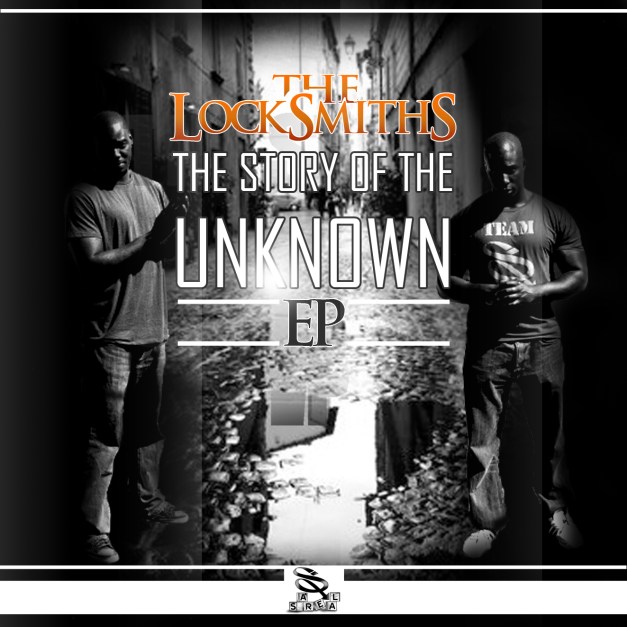
The Locksmiths are a London-based duo comprised of Zushi and Syxx. We’ve been big supporters of these guys since we first came across them back in..well to be honest I can’t even remember, I just know we’ve always been fans. The boys took some time out to answer a few questions we had for them, and gave us a really interesting look into their daily lives, and why and how they make their music. If you’re a fan of Mr 13, Akala, Ruthless, A.C then chances are you’ll appreciate these guys. Even if you’re not, this is a good interview with some very hardworking dudes.
Thanks once again to the Locksmiths dudes for doing this. Bless.
Words: Aimee 1) Who are, how would you describe the Locksmiths to someone that didn’t know you?We go by the name of The Locksmiths, we are a hip-hop duo from West London, who very hard working & passionate about the music we make, and aim to deliver and show that in everything we do.2) What originally got you into hip-hop, what were your influences?
Zushi: I originally got into hip hop via my uncle, who was a DJ & had a vast record collection with many genres, but it was mainly hip-hip at the time & that’s were I 1st started to get into it. Plus I was just interested in the whole culture of hip-hop, it just kinda suited what I’m about. My influences include many artists from A Tribe called quest, Nas to Missy Elliot, plus I was also into graffiti from young which had me roped into the whole hip-hop movement.
Syxx: What got me into hip-hop is the art form and how you can express yourself, and get anything you want from your mind, in a creative way.
My influences in terms of artists are, KRS 1,Busta Rhymes and Method Man. 3) Was it always your intention to do it as a team, and not solo?We would say yeah, I mean in the past we’ve been in various groups. In the end it just ended up being us to which just seem to work, and from then it’s just been family. Plus we do so much together as in run the business as well as being good mates, it’s all just natural to us now. We hardly even get to write with each other these days as much as we talk all the time, but yet when we do write and put a track together, it matches perfectly. Some things were just meant to be, real shit lol. 4) In recent years, UK hip-hop seems to be moving away from the roadman, ‘gangsta’ content in favour of more intelligent, realist subject matter. From your point of view, what would you attribute to this? AND how do you think The Locksmiths fit in to this?
Zush: Would have to say a few. We’re already doing this and being real through music, and there are a few that are starting to click on that too. There’s more to hip-hop than image, so slowly more real subjects and artists are being brought to light. But I do still think a lot of artist are still on a next ting and unfortunately that’s where most of the light gets shone.
Syxx: We’ve never portrayed to be anything than who we are, we always kept it real to how we live, and how life is around us, so subject matters & good content has always been a main focus to us.
5) You guys have been pretty prolific this past year, it seems like you guys really stepped up your game. Your work rate has been crazy; so give us a little more incite to a typical Locksmiths day?Zush: Well my day is all about work, I mean we’re both 9-fivers ha, full-time plus we both run an events company “Team Sa’real” (Quick Plug lol) with another mate so the work rate is always 24/7. All we do is apply that some work rate that we have to something we have a passion for which is music. Plus we still enjoy making music, so after a hard day of making money & slaving away it’s like meditation writing & going to the studio, and as for putting things out consistently, we already work hard so music just gets thrown into the mix.
Syxx: Typical day for me is juggling my day job like Zush said, with dreams of leaving it and doing music as a full time job. I try to inhale as much music as I can as it helps me keep my sanity and keep creativity following. As much as work and family life takes up the majority of my day I still try to write as much music as I can to or from work and during my break.
6) Can you tell us more about The Red Tape collective?Zush: Yeah our boy Mr 13 came up with the idea of putting on a few artist which were us, Mr 13,Big Frizzle & Wordplay. Then there was a few more features from around the way on a EP to make a collective of tracks, which was already bless because we had been doing tracks with each other already. It was just a thing of doing 1 or 2 tracks/vid with all of us on it, I.e “Ignorant” & “Fire” both produced by Nutty P, who was live on production and it was great to work with the man himself.
Syxx: We enjoyed that project, I think some of our best material was done on “The Red Tape”.
7) Your latest EP ‘The Story of the Unknown EP’ is a really diverse release. I mean ‘Hell Break Loose’ and ‘Behind Closed Doors’ could be on different EPs, but still are both firmly Locksmiths’ tracks. Was this intentional to demonstrative your diversity, and is that why you used so many different producers?Yeah defiantly, it instantly shows our diversity in music & how we approach it. I mean like we said a lot of our life is in our music & a lot of our life is ups & down. I mean one minute we can be in the studio making “Hell break Loose” *no pun intended lol* or on stage, than snap, within an hour we’ll be back to reality, dealing with shit at work and family life “Behind Close doors”. That defiantly gets shown in our music all the time ’cause that what it i for us, and it’s nothing for us to put different tracks on the same project like that, because that’s just how our day or week is. A project almost represents a day or a month in the life of The Locksmiths. Using different producers is just our way of bringing out different emotions, the ones we have on the EP are the main ones we tend to work with anyway so it was just us displaying what we do.
8) Keeping it closer to home, what’s your local scene like?
Syxx: Every area has it’s positives & negatives, ours is getting better on the positive in term of music & people working together, so we just try to stick to the positive ones & get work done.
Zushi: Yeah, our side of the boarder is slowly but surely getting better. I mean there’s always been man doing their thing, some have stopped, some are still doing it like us, and I guess it’s just about keeping it up and getting that light over here.
9) What are your plans for the New Year?Zushi: A lot! A nice few new ideas & projects, I think more importantly we have a plan now, so we know exactly what we’re doing & what need be so it’s all about getting it done.
Syxx: Keep being consistent & keep working on getting the name out there.
10) Shout-outs?Zushi: Yeah shout-out to everyone that has been supporting and helping us on our journey, like yourself who enjoys our music & keeps pushing it, bless up.
Syxx: Shouts to the Team “Team Sa’real”, our sponsors The Ink Parlour/Team Tip & Also check out www.teamsareal.com for our events & adventures company & get involved. New Mixtape “The Sa’real World” coming real soon.
Fresh of the release of his new album “Selling My Soul”, Masta Killa of Wu Tang Clan recalls missing the “Protect Ya Neck” studio session, earning the last spot in the Clan with his verse on “Da Mystery Of Chessboxin”, and other tales from the good old days. “Selling My Soul” is now available in physical and digital stores everywhere.
This is something I’ve wanted to do for a long a time, and I’m super excited to finally share it with the rest of the internet universe.
Hip-Hop Life & Times is a hip-hop site (no way, really?), which means we cover the whole culture and genre. Yes of course there’s always going to be more articles about rappers, that’s just the nature of the current state of the scene-but we’ll always be site that remembers ALL elements: MCings, DJing, graffiti, Breaking, knowledge and beatboxing. With that in mind I was lucky enough to sit down with CEO and owner/editor of the very successful graffiti-based website www.thelondonvandal.com, Keegan Webb. Keegan is a really nice dude, and I really enjoyed talking to him, and I hope you’ll enjoy reading the interview.
1) Who are you, and what do you do?
I’m Keegan, and I run The London Vandal, which is an online graffiti and urban sub-culture magazine. We have existed since 2009, and have been getting ever more popular since day one. Now we run a graffiti supplies webstore too.
2) How did it all come about?
I’ve been obsessed by graffiti for years and years, but I got into painting it myself in my mid to late teens, and have been addicted ever since. Eventually, I started a website posting photos of my work, but realised I enjoyed posting other peoples (far better) work more. So I made the site about other peoples work. Then I started posting things that weren’t really graffiti, but were related, like hip-hop and graphic design. Then it expanded to include street wear, events, film, photography and the rest of it. Two versions of the site later, and a team of dedicated vandals later, and we ended up with one of the UK’s most popular graff sites.
3) Was it initially just on your own?
To start, it was just me. But then Ray got involved. He is a technical genius and got the site in ship-shape from a technology perspective. He has great ideas for content too. We work well together.
4) What got you in graff? Were you brought up in a creative family; were you really interested in visual art?
I’m not sure how I got into graffiti really. I didn’t know any other kids who were into it, and my family isn’t particularly creative. I used to draw a lot as a kid, but preferred comics and manga. I reckon growing up in Hackney in East London and then moving to Wood Green in Noth London probably played a part. My family never had a car, so I rode public transport a lot. I was seeing a lot of graffiti because of that. I guess I just thought it was incredible that someone had gone and done *that*, and combined with my love for hip-hop culture and rap music, it was a matter of time before I started dabbling.
5) What did you start out doing, style wise?
I started with the classic London chrome dubs style. I loved it’s aggression and history. Then I tried to move towards wildstyle because I thought it was more technically impressive. Turned out I sucked at that. Eventually I moved to a more graphic style. I don’t paint a huge amount compared to some of the people out there. I find it hard to get excited about my own stuff. I’d much rather look at other people’s graff.
6) Favourite style as a writer and/or fan?
Oh man, it’s so, so hard. The hardcore London styles still get me going when I spot a nice trackside of whatever. But I’m really into what some people are calling graffuturism at the moment. Artists like Roids, Wais, Sat One, Augustine Kofie. I’m also loving Horfe from France, Cassette Colour 90 from Russia and Lush from Australia – as well as all those other cartoony guys. Talking of cartoony guys, gotta mention Malarky. He is on fire at the moment. So yeah, I have pretty varied taste in terms of style. I don’t know exactly how to describe graffuturism. There is a site by that name that posts some cool stuff, but the terms exists outside of them. Basically, it’s a super-futuristic style of graffiti that goes beyond letterforms, or even wildstyle letter forms and become almost abstract works of design. Roid/Steroid is one of the UK’s best examples of graffutirism on the street.
(Click picture for link)
7) How would you rate the current state of graffiti and the culture of it in the UK and/or the rest of the world?
There are hundreds and hundreds of incredible artists in the UK. Even after years of study, I discover new ones on the regs. And the attitude towards graffiti from the younger generation and liberals is incredibly positive.
There is a vocal minority who don’t understand graff and have a negative attitude towards it. They cause us all kinds of problems with heavy-handed policing, closing down of “legal” walls, and zero-tolerance policies. But we survive 🙂 Graffiti and street-art don’t require permission, so they can’t stop us just by telling us no. The culture is strong here, and there is a great, friendly scene no matter what anyone tells you!
As for the rest of the world, I think it varies. Some countries in the least economically developed nations, and in the East and Middle East are only starting to develop their own graffiti and street-art scenes now. Time will tell how the authorities will react. Other countries, particularly South America have really positive attitudes towards graffiti that have fostered a really strong and open scene. Then you have countries like the US and lot’s of European countries where graffiti if considered a social-ill and is heavily punished. I think the UK does fall into that category, but things are changing because young people love it so much.
8) Leading on, how would you say the attitude to graffiti has changed in the last 15 years or so? From the general public.
Graffiti has mass appeal and is going from strength to strength in terms of popularity. I can’t remember the last time I met someone who said they don’t like graffiti. Some say that they only like “good” graffiti, but I think those people are just covering their asses – they don’t want to look like they are condoning vandalism. But they are, because they like some of it. The stigma is washing off, and people are starting to look past the law and are deciding for themselves. And they love this shit.
9) But talking of other writers and artists, I know you have already but who would you say inspires and impresses you right now. Whether it’s within the graffit scene past or present, or in the general art world?
In terms of street atuff, the first writers I ever thought were amazing were ATG and DDS crew. ATG are so incredibly successful now, and DDS still represent in a big way. I’m still in awe of Tox, and have loads of love for 10Foot. OPD crew are incredible too. I also have mad respect for people like Twesh, Soleo, Towns, Vibes. The list of people who’s stuff is dope is just too long. I really don’t know where to start. I’m like sponge when it comes to graff. I just soak it all up.
10) Being that graffiti is still a major part of hip-hop and one of the founding 5 elements, how would you say people within hip-hop that don’t graff treat it?
Hip-hop culture and graff have a very special relationship, what with graff being one of the elements and all. I think that hip-hop heads have a special understanding of graffiti that you don’t always get elsewhere, because the two have so often come packaged together. I think that is changing now though. I feel like rap music and graffiti are starting to part ways now that graffiti has found it’s feet in mainstream culture. Once upon a time you would find all of the graff writers hanging out at a rap show, or drum n bass if you were in the UK. Now you might meet a writer at an electro rave or a metal gig. It’s becoming more diverse. I think it’s a great thing. Graffiti needs to be bigger than hip-hop. It’s annoying when people who don’t know the first thing about graff come up to you and start telling you about their views on Banksy or Shephard Fairey etc, and it’s annoying when marketing firms try to use graffiti in their adverts and get it totally wrong. I don’t feel a need for graffiti to be totally clandestine either. There is a balance I think. When you are chatting to someone at a party, and they tell you they like graff by Temp32 or Lone or whoever, that has to be a good thing.
11) What are you hopes for the future for The London Vandal?
We’ve started selling clothing and graffiti supplies and that is doing really well. We think we can quite realistically become the UK’s biggest supplier of graffiti supplies online. The clothing is doing really well and we are planning on getting loads more designs out over the next year. That’s certainly a key goal of ours.
We’re also trying to get more talented and passionate people involved in the online magazine. Aside from that, we have a whole load of projects coming up in 2013. We want to run a few shows, and put out a zine.





 hiphoplifeandtimes